Off season
The Ice Shove, and What February Does to a Shoreline
Wind pushes a frozen lake ashore in plates the size of doors, then leaves them stacked along the beach until April. Six days of watching it happen.
July 14, 2026 / Eastern Lake Erie / February / 9 min read
Erie is the shallowest of the five lakes and the first to freeze, which is the whole reason this trip exists. A shallow lake gives up its heat quickly. By the middle of a cold February a large part of it is covered, and when the wind gets behind that cover it drives it ashore.
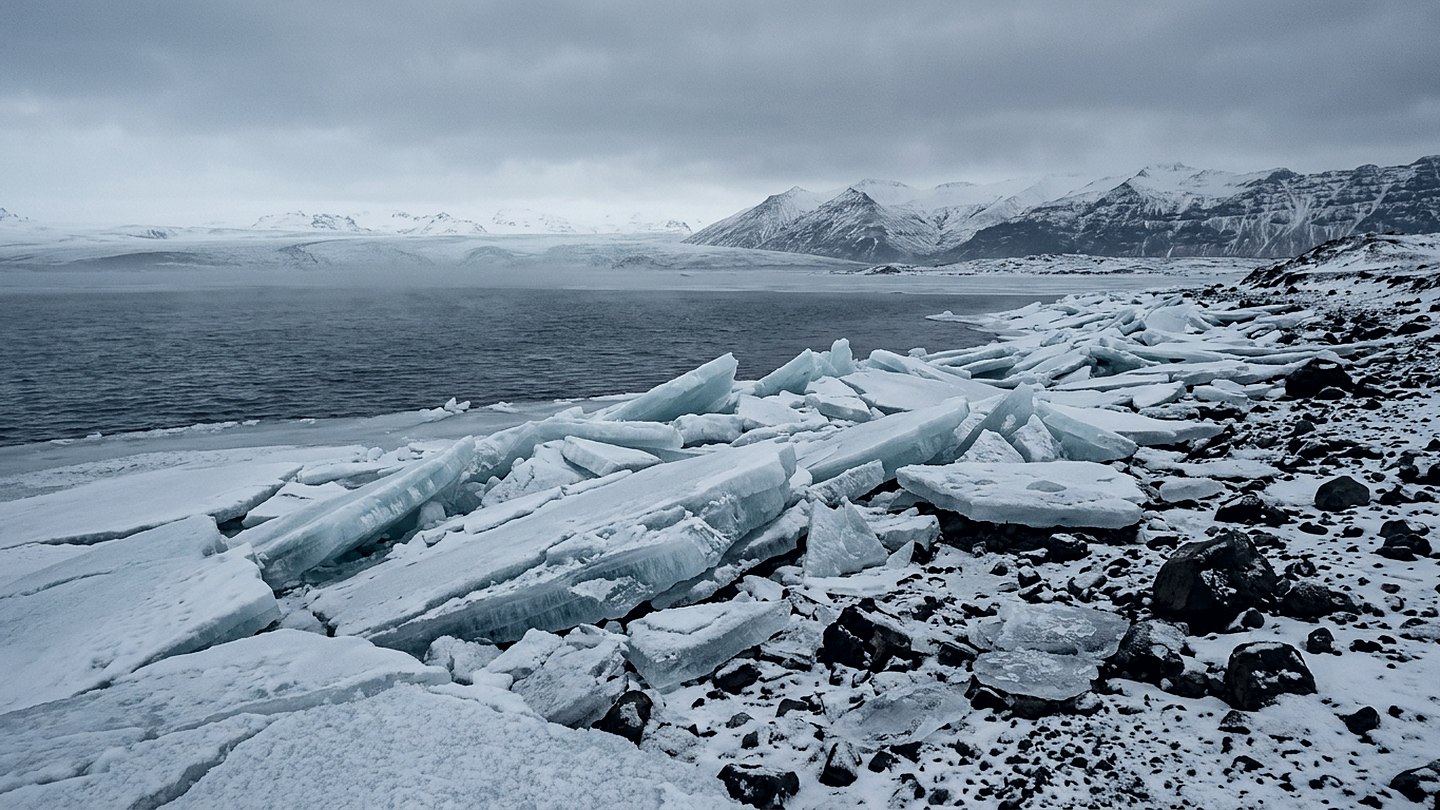
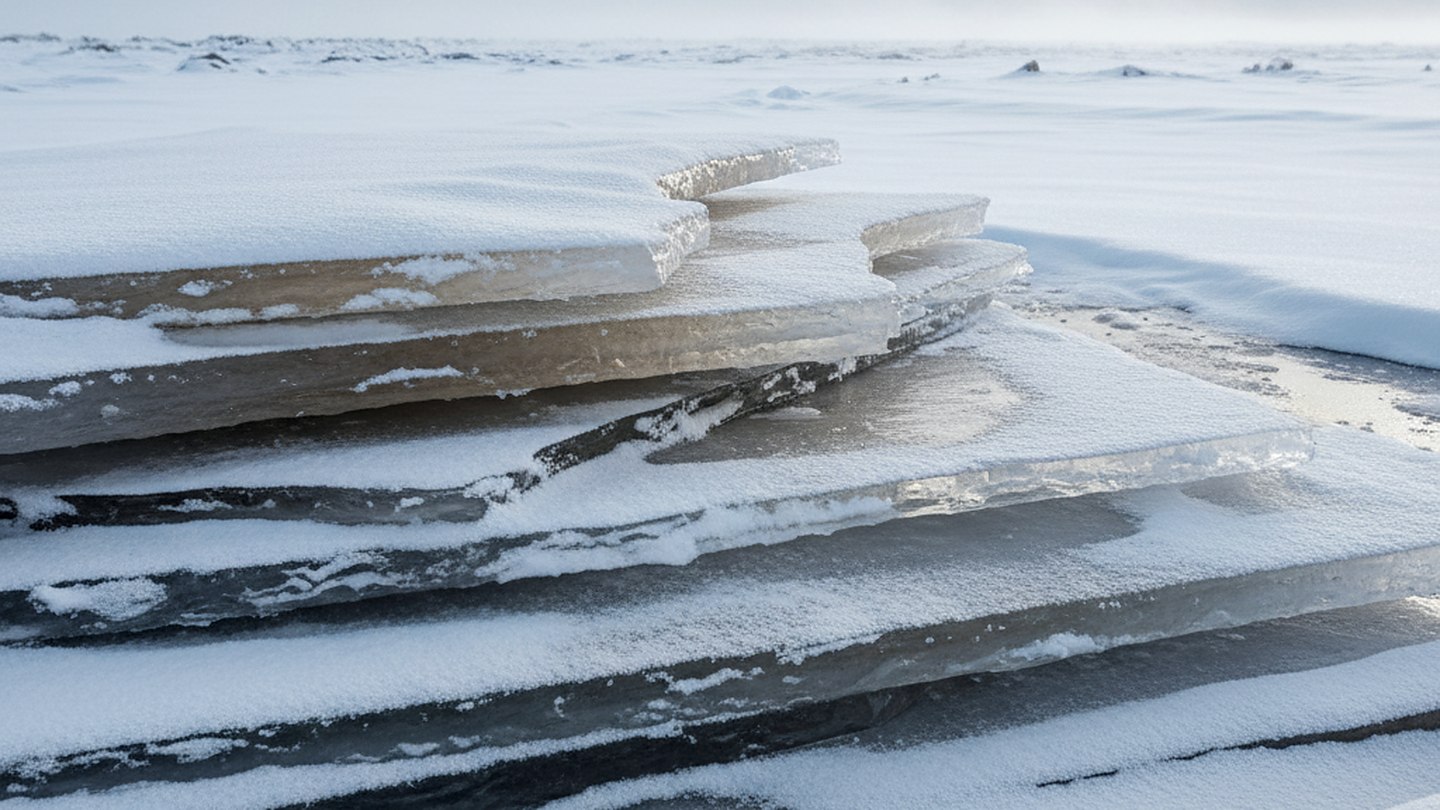
The result has a plain name. An ice shove. Plates of lake ice, some of them a metre across and a hand thick, get pushed up the beach and onto each other until there is a ridge along the shoreline that can stand higher than a person. It happens on a scale that is difficult to believe from a photograph and it happens fast.
I gave it six days and got one good build. That ratio sounds poor and is not.
01Reading the week before you go
The forecast that matters is not tomorrow's temperature. It is the wind, and specifically a sustained wind from the southwest after a stretch of cold hard enough to have put a cover on the water.
What I watch for is a run of at least five days below freezing, ideally well below, followed by a day with wind in the twenties or thirties of miles per hour blowing along the long axis of the lake. That combination breaks the sheet offshore, floats it toward the eastern end, and stacks it. Without the cold there is nothing to push. Without the wind it stays where it is and slowly thickens.
On this trip the cold arrived first, four days of it, and the wind came in on the fourth afternoon.
02What it sounds like
I was standing on a bluff above a public beach when it started, which was luck rather than judgement.
The noise came before anything visible. A grinding, and under it a series of hollow knocks, the way heavy furniture sounds when somebody is moving it in a room above you. Then the near edge of the sheet began to buckle and ride up, and pieces started sliding onto pieces, and within about forty minutes there was a ridge along two hundred metres of beach that had not existed at lunchtime.
It is not a smooth process and it does not stop cleanly. For the next two hours things kept shifting and settling, and every so often a plate the size of a table would drop off the top of the pile and break.
A shove does not creep. It arrives over about forty minutes, sounds like furniture being moved in an upstairs room, and then it is simply there for two months.
03Where to stand, which is the important part
I want to be very plain here, because this is the one section of this report that could matter to somebody.
Stay on land. Not on the shove, not on the shelf, not on any part of the ice at all. The stacked ice looks solid and is not: it is a heap of separate plates with air and water between them, it is still moving for hours after it forms, and it sits directly over open water at the outer edge. The shelf beyond it is worse, because it hides open lake underneath and it can break away as a whole.
Local emergency services publish warnings about this every single winter for the reason you would expect. Signs at the lakeside parks say the same thing. I have no interest in adding a caveat to that, so: the photographs in this report were made from the beach and from a bluff above it, using a long lens, with the nearest ice about fifteen metres away from where I was standing.
The other practical hazard is duller and more likely. Packed snow over frozen sand is genuinely slick, and the slope down from most parking areas to most of these beaches is steeper than it looks. I wore cleats over my boots on all six days and used them.
04Light on white
An ice field in sunshine photographs badly. The dynamic range is impossible, the white blows out, and the shapes flatten into a glare.
Flat grey overcast is the right condition and there is a great deal of it here in February. Under cloud, the ice separates into its actual colours, which are not white: there is a pale green in the thicker plates, a grey brown where sand has been churned into them, and a real blue in any piece that has been submerged and refrozen. Edges read properly. Texture reads properly.
The one exception worth chasing is the half hour after sunrise on a clear morning, when the light is low enough to rake across the ridge and pick out every fracture. That happened once in six days. I was there for it and it is the frame I kept.
05The rest of the shoreline
A shove is not the only thing February does here.
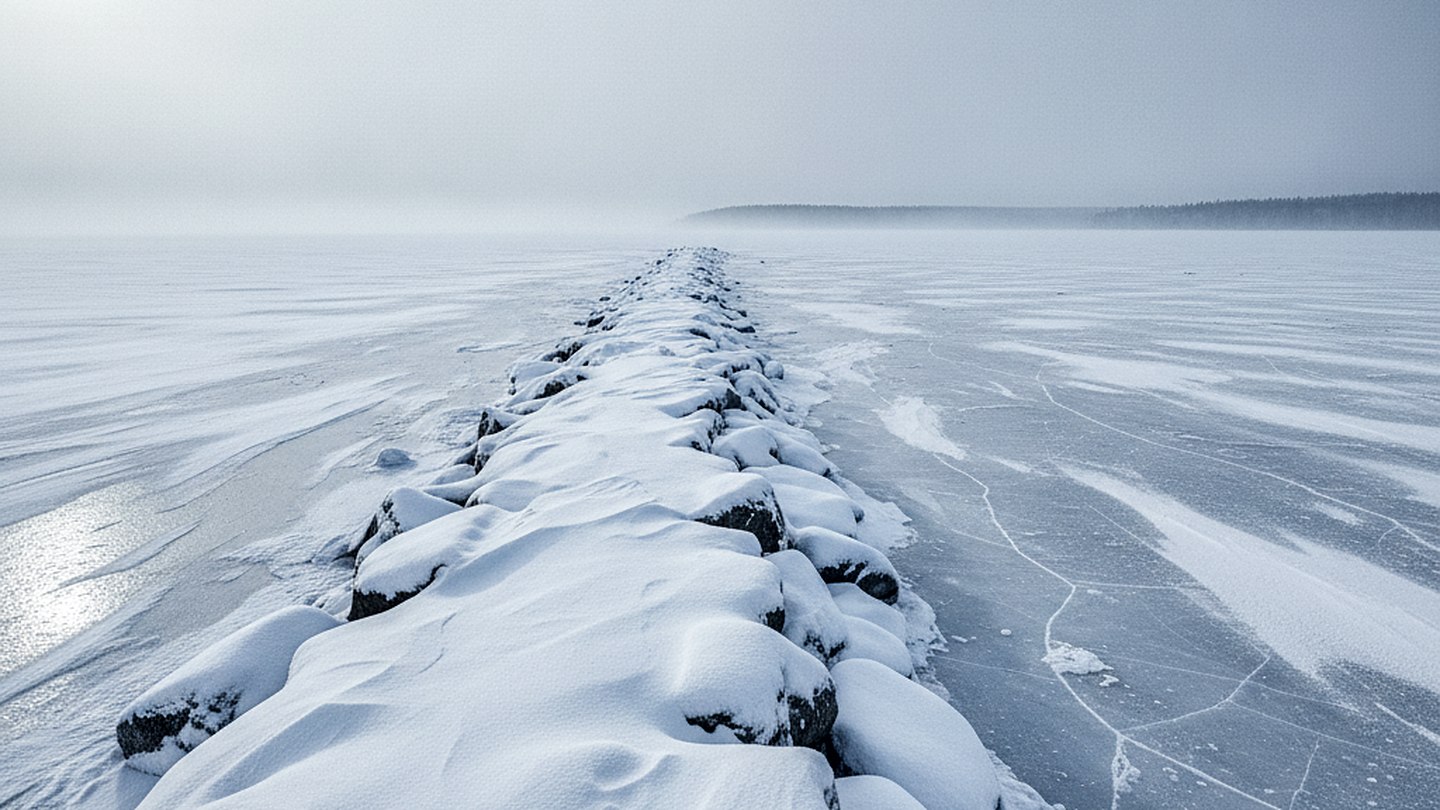
Where a breakwater or a pier runs out into the lake, spray freezes onto it in layers until the structure disappears under a rounded coat of ice half a metre thick. The shapes are extraordinary and they build over a matter of days. Where a creek runs into the lake there is usually open water, steam rising off it in the cold, and a hard line where the ice starts again.
The beaches themselves change character completely. Sand becomes a hard pale surface with wind ripples frozen into it. Anything left out from summer, a bench, a bin, a fence post, acquires a snow cap on the windward side and a bare stripe on the other, which tells you which way the weather has been coming from all month.
06Getting there and staying warm
This is a car trip. The lakeside parks are strung along a shoreline road with a few miles between them, and the point is to be able to move when the wind changes.
Check what is open before setting out. Several of the parks along this stretch close their gates for the season and the ones that stay open may plough only the first section of the car park. On this trip one gate was shut, one was open with a single ploughed lane, and one was fully cleared.
Nothing here involves long walks, which changes the clothing problem entirely: standing still in wind at minus eight is far colder than moving in the same conditions, and the failure mode is always hands and feet rather than core. There is a separate report on this site about exactly that, and I wrote it after this trip.
07Would I plan a week around it again
Yes, with the same expectations. A shove cannot be booked. It needs a specific sequence of weather and it is over in an hour, and the honest way to plan for it is to give a cold week to a shoreline you can reach quickly and accept that most of that week will be spent looking at ice that is not doing anything.
What makes the trip work anyway is that the not doing anything is also worth photographing. Six days on a frozen lake shore in February gave me one shove, three good mornings of rime on a breakwater, one clear sunrise, and a large amount of standing about in the cold with nothing happening. I would take that again in a heartbeat.