Off season
Five Days in the Snow Belt, Where the Measurement Is in Feet
A plateau east of the lake collects more snow than anywhere else in the eastern United States. Banks over the roof line, a road cut like a corridor, and a silence that is genuinely unusual.
June 8, 2026 / Tug Hill plateau, New York / February / 10 min read
The plateau east of Lake Ontario receives more snow in an average winter than anywhere else in the eastern United States. Not by a small margin. Some communities up there average over five metres a season, and the record for a single season sits well above that.
The mechanism is not complicated. Cold air crosses a lake that has not frozen, picks up moisture and heat, hits rising ground on the far side, and drops everything it collected in a narrow band. Because the wind holds a steady direction for hours at a time, the band parks over the same few miles and stays there.
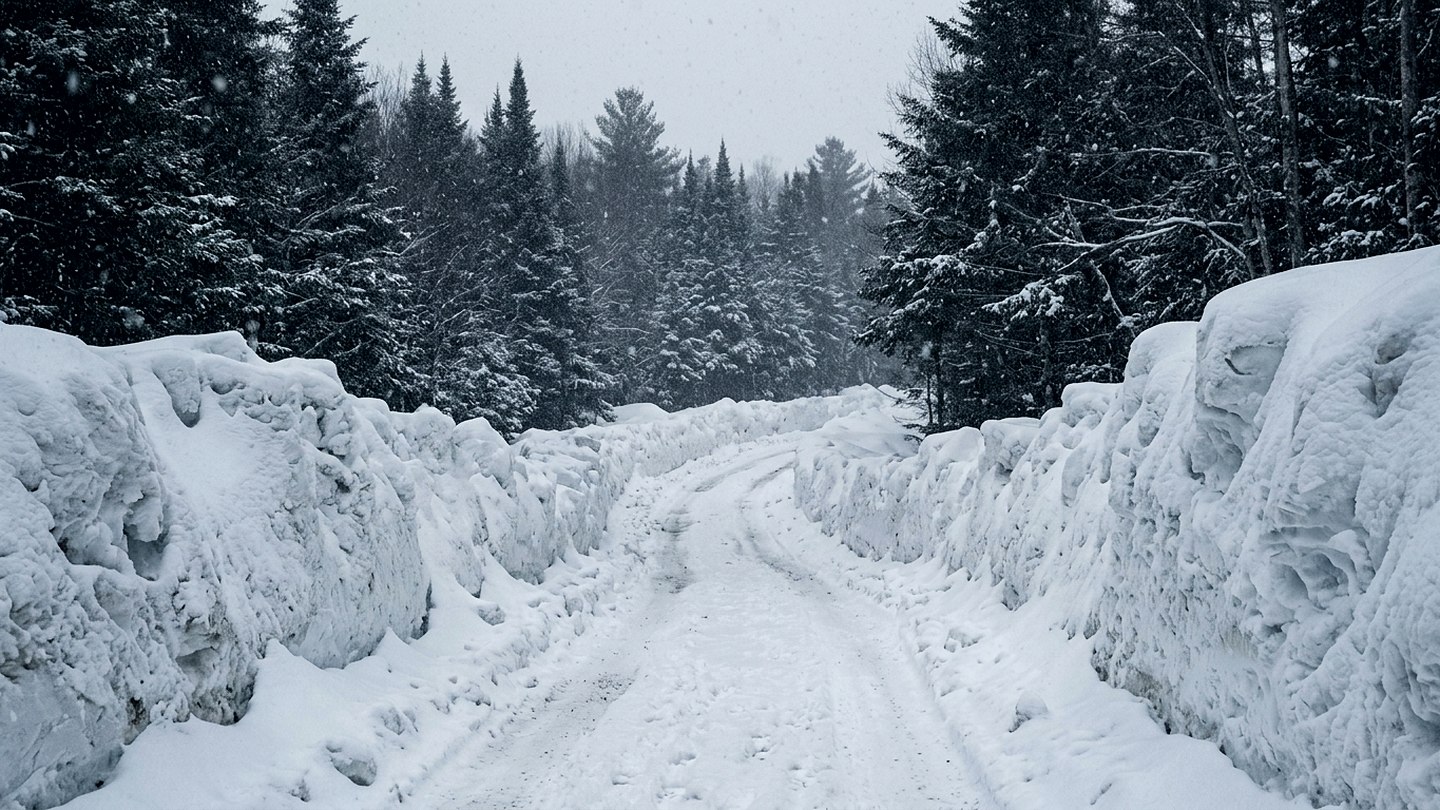
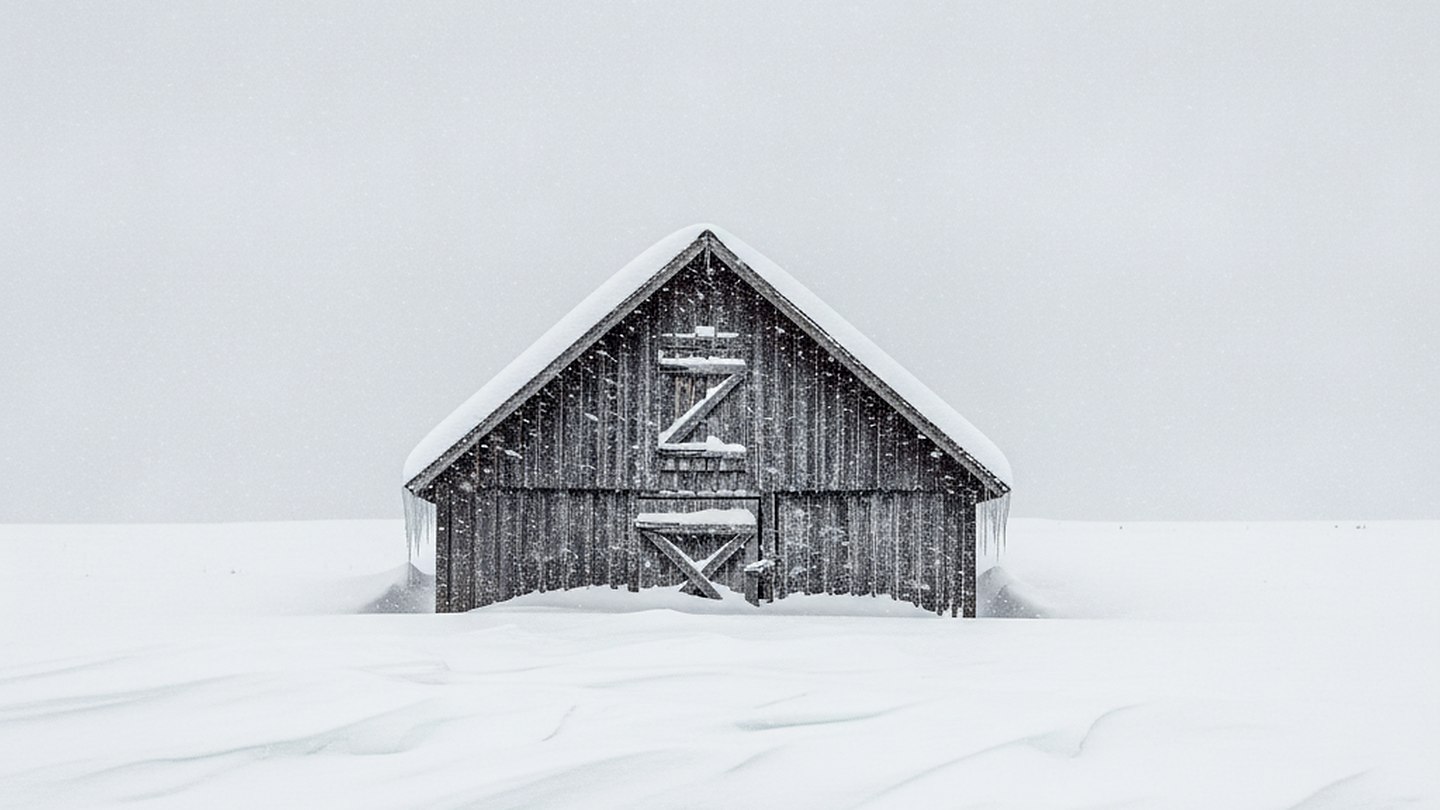
What that produces on the ground is a landscape with different rules. Snow banks above the roof of a car. Barns with only their upper half visible. Roads that read as corridors rather than surfaces. I spent five days in it in February.
01The band is narrower than you expect
The single most useful thing I learned is that a lake effect band is perhaps ten miles across.
That has a strange practical consequence. Standing in the middle of one, visibility is fifty metres and there is snow falling at rates that sound made up. Drive eleven minutes perpendicular to it and you can be in sunshine looking back at a wall of grey. On the second afternoon I did exactly that twice, deliberately, to see it, and it never stopped being odd.
For anybody trying to photograph this, it also means the forecast for the nearest town is close to useless. What matters is the band position, which moves as the wind direction shifts by a few degrees, and which local radar shows plainly.
02Go the day after
My instinct on the first trip up here, years ago, was to be inside the band while it was working. That produced almost nothing usable: white sky, white ground, no contrast, wet equipment, and visibility that removed every background.
The day after is the one to be there. The band moves off or dies, the sky often breaks, and the landscape it left behind is astonishing and legible. Fresh depth on every surface, undisturbed except by wind, and the first side light in days.
That was the shape of this trip. Snow on the second night, roughly forty centimetres of it, then a clear cold third morning. Everything I kept is from that morning and the one after.
03What deep snow does to buildings
The frames people remember from this region are the buildings, and the reason is scale.
A barn with a metre and a half of snow around it stops reading as a barn. The proportions go wrong: the doors are half buried, the windows sit at knee height on the drift, and there is a rounded cap of snow along the ridge that overhangs by an absurd amount. Fence lines vanish entirely and reappear as a slight ripple. Machinery left out in a yard becomes a set of soft white shapes with no identifiable purpose.
Nothing about it is dramatic in the way ice is dramatic. It is quiet and slightly surreal, and it photographs best in flat light where the surface texture of the snow is the only detail available.
A lake effect band is perhaps ten miles wide and it does not move much. You can drive out of two feet of falling snow into clear sky in about eleven minutes.
04Driving, and the etiquette of it
This is entirely a car trip and the driving deserves its own section.
Main routes are ploughed constantly and well. The crews here are extremely good and they are working with volumes that would shut a city elsewhere for a week. What they cannot do is get ahead of a band while it is producing, so during a heavy hour the road you are on may have several centimetres on it regardless of how recently it was cleared.
The etiquette is simple and worth taking seriously. A plough owns the road. Do not pass one, do not sit close behind one, and pull well over when one is coming the other way, because the wing throws snow a long way. On narrow stretches where the banks are high there is genuinely nowhere to go if you meet something large, so speed should be whatever lets you stop in the distance you can see.
Fill the tank whenever you pass a station rather than when the gauge suggests it. Distances between them are longer than the map implies and some close early in winter. Carry water, food, a blanket and a shovel. I have not needed any of it up there yet and I will keep carrying it.
Side roads are the other thing. Several are simply not maintained through the winter and are left under a metre of snow with a barrier at the end. Those are not an invitation. The barrier is there because the road underneath is unploughed and unpatrolled.
05The silence
The thing I did not anticipate the first time and now go back for is how quiet it is.
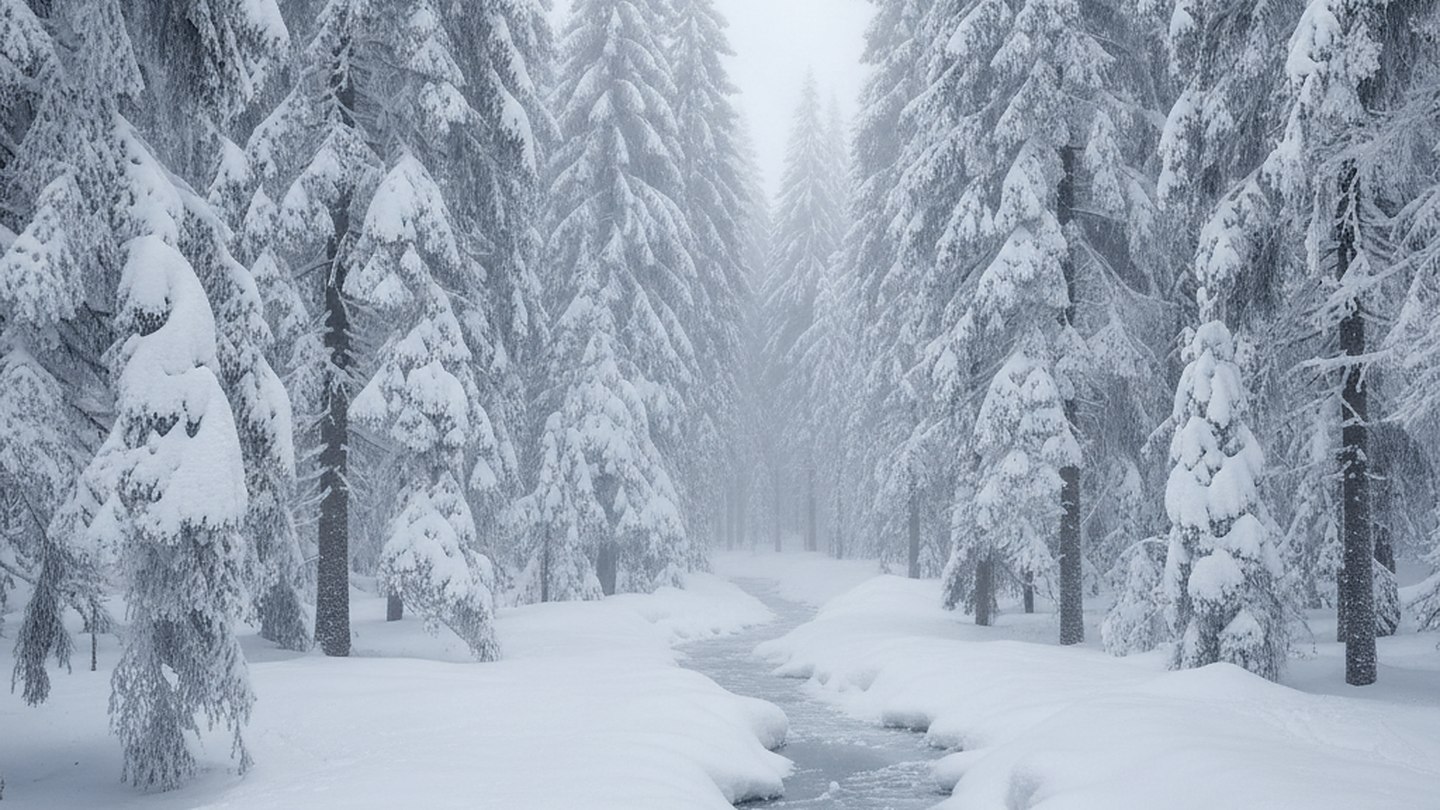
Fresh deep snow absorbs sound almost completely. Standing in a clearing on the morning after a heavy band, with no wind, there is effectively nothing to hear. Not a hush, which implies something being suppressed, but an actual absence. The first sound after several minutes of that, a branch dropping its load or a distant plough, arrives with a clarity that is slightly startling.
It does not photograph. I mention it because it is half of why I keep going back.
06Where to base yourself
The villages along the western edge of the plateau are the practical option: small, working, with somewhere to eat and somewhere to sleep, and close enough to move onto the plateau in twenty minutes when the sky clears.
Everything up there is set up for winter and none of it is set up for winter tourism, which is a distinction worth respecting. This is a place where snow is a working condition rather than an attraction, where people are managing roofs and driveways and livestock in it, and where a visitor standing in a lane with a tripod is a mildly interesting event. Park somewhere that is not in anybody's way, stay out of yards, and if somebody comes out to see what you are doing, say so plainly. Every conversation I have had up there has been friendly and most have included better directions than I had.
07Would I go again in February
Every year if I could. The plateau in a heavy winter is one of the few landscapes in this part of the country that is genuinely transformed rather than merely covered, and the window for it is short: too early and there is no depth, too late and it is settling and dirty.
The trick is flexibility. Watch the band, be within a couple of hours of it, and be prepared to sit out a day of white sky in a diner in order to have the morning after. That is not a hardship. The diners are good.