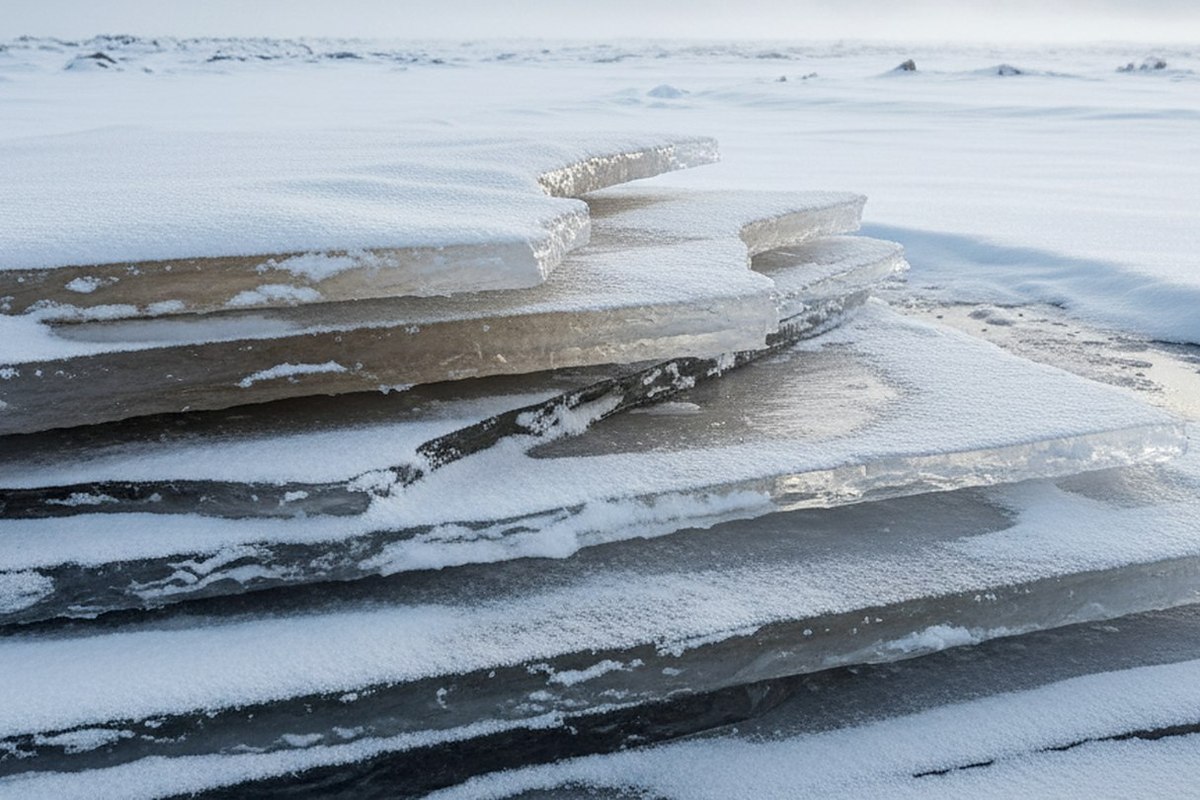
Off season
The Ice Shove, and What February Does to a Shoreline
Wind pushes a frozen lake ashore in plates the size of doors, then leaves them stacked along the beach until April. Six days of watching it happen.
Section One
Everything filed here is a place, visited deliberately in the part of the year it is least visited, and stayed in long enough for the weather to do something.
That last condition is the awkward one. Cold season subjects are short lived and conditional. An ice shove needs a specific wind after a specific run of cold. Rime needs a hard freeze with mist. Deep snow needs a band to park overhead and then move off. None of it can be scheduled, so each of these trips was booked as a window rather than an itinerary, and each of them contains a lot of waiting.
Off season
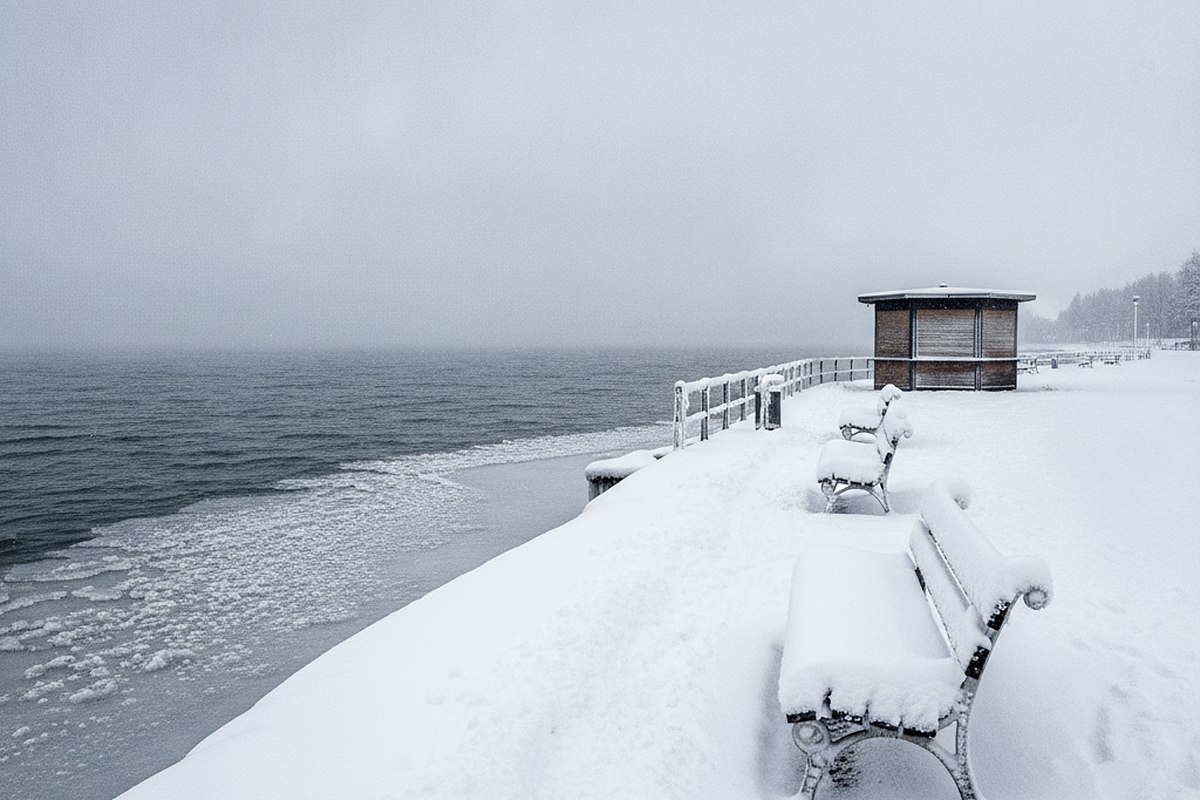
Wind pushes a frozen lake ashore in plates the size of doors, then leaves them stacked along the beach until April. Six days of watching it happen.
Off season
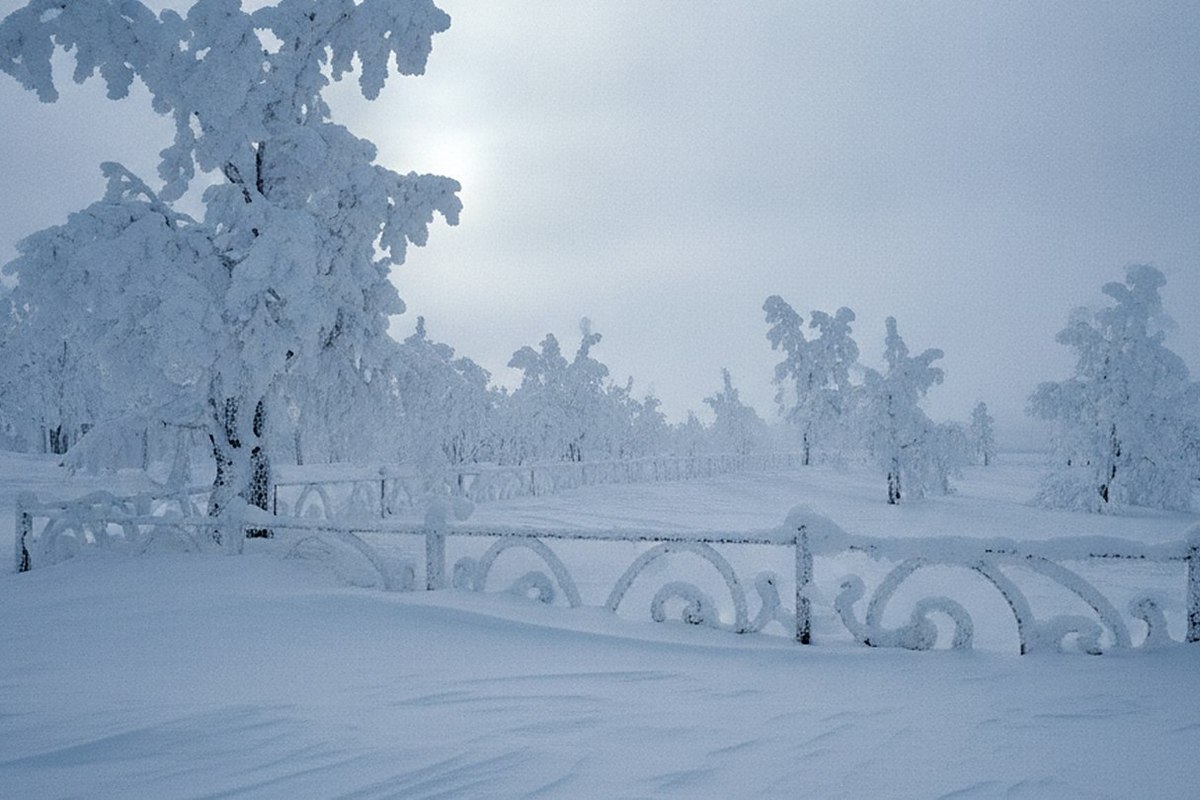
Frozen mist coats every railing, branch and lamp post along the rim until the whole gorge looks upholstered. Four days in the coldest and emptiest week of the year.
Off season
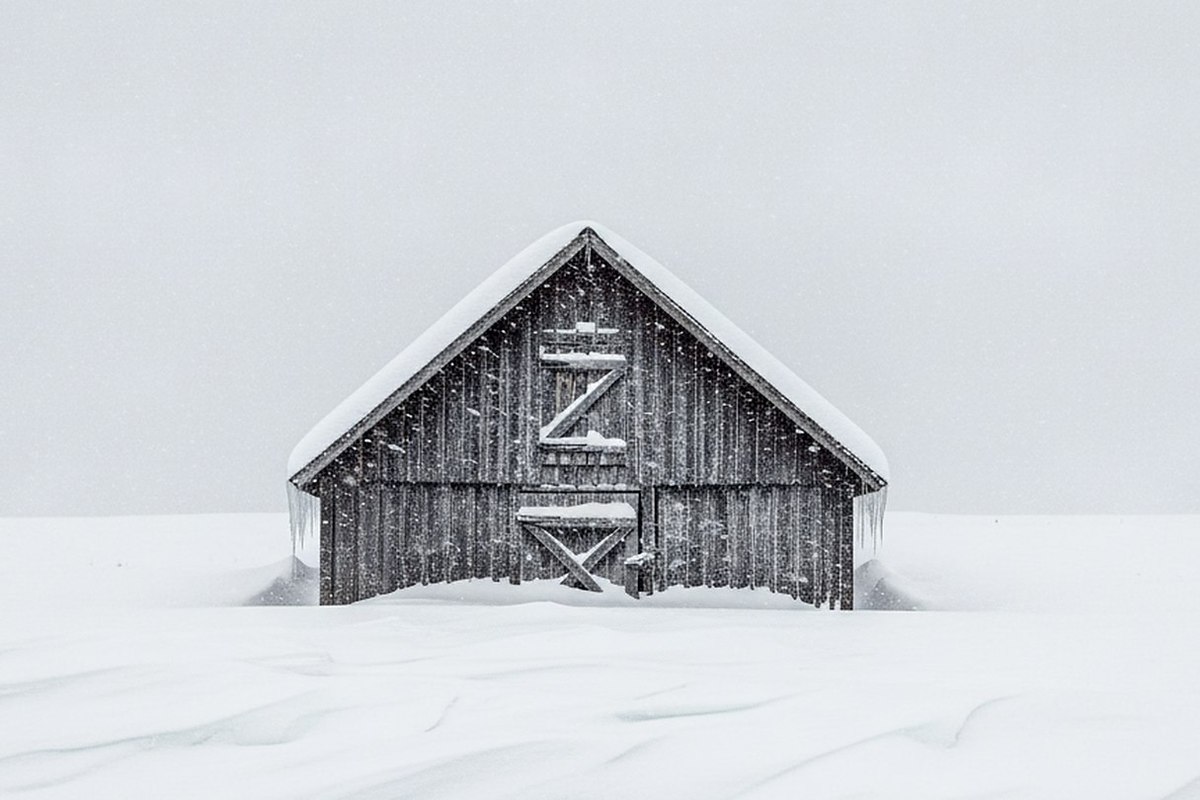
A plateau east of the lake collects more snow than anywhere else in the eastern United States. Banks over the roof line, a road cut like a corridor, and a silence that is genuinely unusual.
Each report follows the same working method, set out here so nobody has to guess what they are reading.
The trip is planned around a weather pattern rather than a date, and the length is set by how long I can afford to sit and wait. I go alone, drive, and stay somewhere close enough to move within half an hour when conditions change. Nothing is arranged in advance beyond a room and a tank of fuel.
Photographs are made across whole days, mostly in flat overcast, which is the correct light for snow and ice and which this region supplies generously. Frames are graded for exposure, contrast and colour and are never combined, moved, or built from more than one moment.
The block at the end of every report records the actual conditions: temperatures, wind, hours of usable daylight, what was open and what was shut, and what the ground was like underfoot. It is there because those are the numbers I would want from somebody else, and because a report that leaves them out is easy to read and hard to use.
Nothing in this section is paid for by anybody, and none of the places described has any connection to this journal. Where a park, a road or an authority is named, it is named as a fact of the account. Where something has changed since I was there, the desk would like to hear about it, and a correction goes at the top of the report with its date.